

Software architecture is the discipline of designing and structuring software systems. It organises the main components—databases, user interfaces, servers, services and applications—so that they work together reliably and remain easier to evolve.
Modern architectures also define how data is collected, stored, transformed, distributed and consumed. A sound design helps teams connect data across services or locations and reduce isolated data silos without forcing everything into one complex central store.
Common software architecture models
Frequently used architecture models include:
- Client–server architecture
- Event-driven architecture
- Service-oriented architecture
- Modular architecture
- Layered architecture
- Data-centric architecture
Each model groups a system’s components into logical responsibilities. The best choice depends on the product, its constraints and the qualities it must deliver.
Client–server architecture: benefits and limits
Client–server architecture separates a system into two main parts: the client provides the user interface, while the server supplies the data and services needed to answer requests.
- Centralised administration: access rights, software and data updates are easier to manage.
- Consistent access control: central policies can strengthen system security.
- Shared services: one server can serve many clients, improving efficiency and reducing duplication.
- Mature technologies: established tools make implementation and maintenance more predictable.
The model also has trade-offs. A server outage can affect many users, server resources can become a bottleneck, and requests may take longer under heavy load. These risks must be considered during design.
Architecture and modern technologies
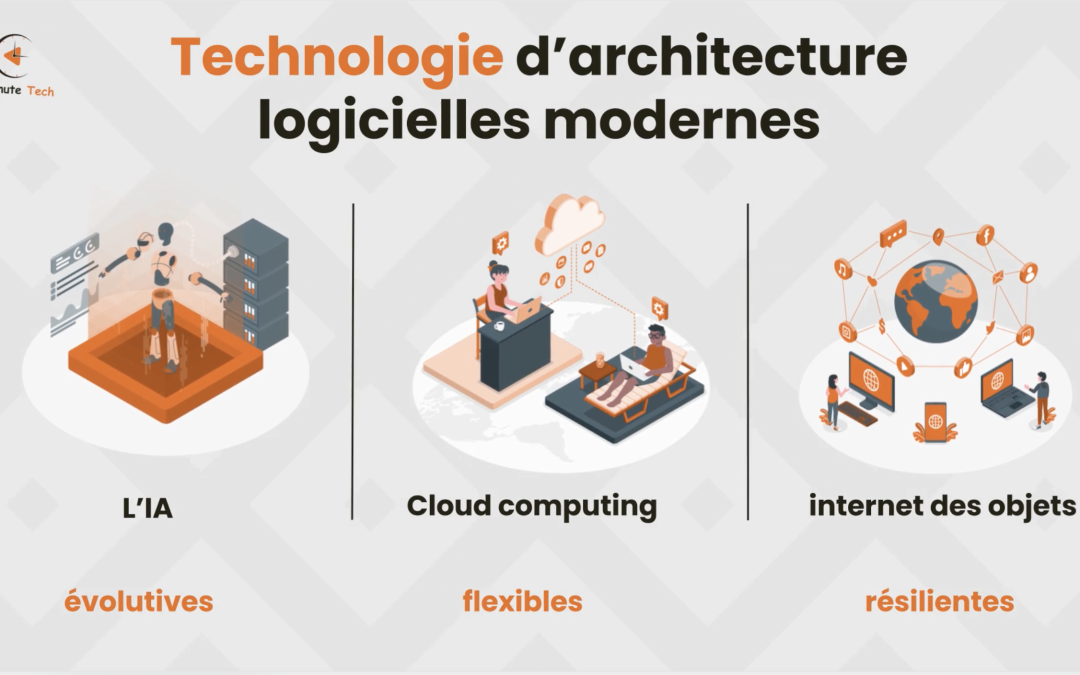
Modern software increasingly uses artificial intelligence, cloud computing and the Internet of Things (IoT). AI can improve data quality and automate processing. Cloud platforms provide scalable storage and computing, while IoT devices collect information from sensors and connected equipment.
Well-designed architectures aim to be scalable, flexible and resilient. They adapt to changing user needs, tolerate hardware or software failures, and include security controls that protect systems and data from internal and external threats.
How to choose the right architecture
The right architecture depends on functional needs, business constraints, technical concerns and quality attributes. A useful method is to identify the project’s architectural drivers: the requirements and constraints that have the greatest influence on the system’s structure.
Key architectural drivers
- Functional requirements
- Business constraints and stakeholder preferences
- Technical constraints and concerns
- Quality attributes such as security, scalability, availability and maintainability
Once these drivers are clear, compare the available models against them. If scalability is essential, a service-oriented or layered architecture may be appropriate. If security and controlled data access dominate, a data-centric or event-driven approach may be more suitable.
Project complexity, team size, budget and deadlines also matter. Architecture is not about choosing the most fashionable pattern; it is about selecting the simplest structure that meets today’s needs without blocking tomorrow’s growth.
Build on a clear technical foundation
Identify your architectural drivers, evaluate the realistic options and document the reasons behind your choice. This creates a shared foundation for better technical decisions throughout the product’s life.
Need help designing or delivering a software project? YOUPI can provide support tailored to your objectives and constraints.